Have you ever noticed your gut acting up right when life gets stressful? Maybe you have a deadline, a difficult conversation ahead, or just too much on your mind. Suddenly, your stomach feels uncomfortable, you’re running to the bathroom more often, or your usual IBD symptoms seem harder to manage.
It’s not just in your head. Your brain and gut constantly communicate, and stress can affect how your digestive system feels and functions. If you’re living with Crohn’s disease or ulcerative colitis, this connection can be especially important.
But does stress actually trigger an IBD flare-up, or can it simply make your symptoms feel worse? Let’s explore the gut-brain connection, what happens inside your body during stressful moments, and how you can support both your mental and digestive health.
What Is the Gut-Brain Connection?
The gut-brain connection is the two-way communication system between your brain and your digestive system. Think of them as two teammates constantly sharing updates. Your brain can influence how your gut functions, while signals from your gut can affect your mood, stress levels, and overall well-being.
This communication happens through the nervous system, hormones, and other biological pathways. When you’re stressed, your body’s response can affect digestion, gut sensitivity, and bowel movements.
For people living with Crohn’s disease or ulcerative colitis, this connection is particularly important. Stress may make digestive symptoms feel worse and can influence how you experience your condition. However, stress doesn’t cause IBD, and worsening symptoms don’t always mean inflammation has increased.
Why Stress and IBD Can Become a Cycle
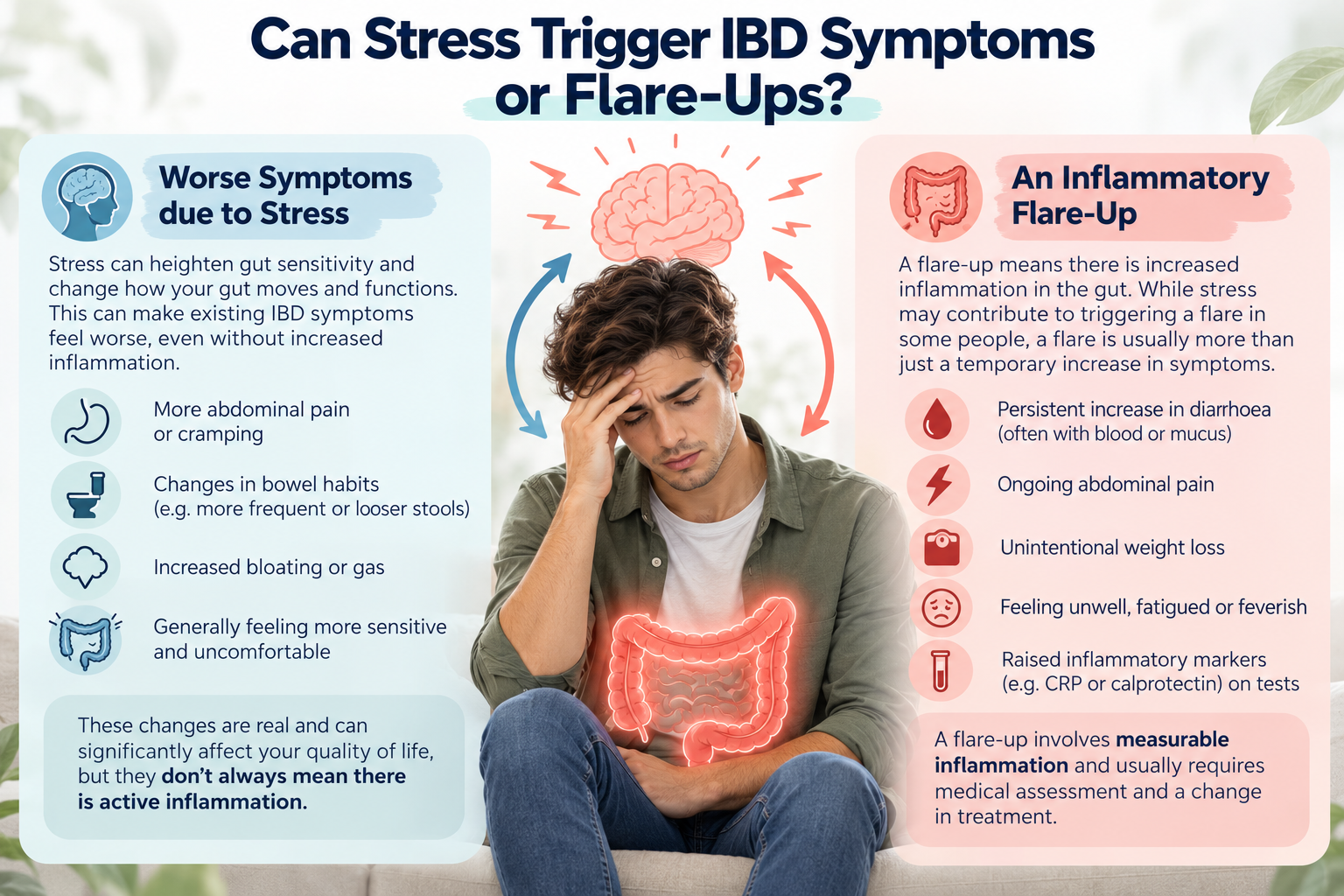
Living with IBD can be stressful on its own. You might worry about finding a toilet when you’re out, managing symptoms at work, or not knowing when your next flare-up might happen. And sometimes, that stress can make digestive symptoms feel worse.
- Stress affects your gut: When you’re stressed, your body releases stress hormones that can influence digestion and gut sensitivity.
- Symptoms add to the stress: Abdominal discomfort, urgency, or frequent bathroom visits can make everyday activities feel more challenging.
- Worry makes it harder to relax: You may start worrying about when symptoms will return, which can increase anxiety and affect your sleep.
- The cycle continues: Ongoing stress and digestive discomfort can feed into each other, making it harder to feel comfortable and in control.
For example, you might feel anxious before a social gathering because you’re worried about your symptoms. That anxiety may make you more aware of digestive discomfort, leaving you even more worried about going out.
The important thing to remember? This cycle isn’t your fault. While you may not be able to eliminate stress, learning to manage it and getting the right medical support can help you cope with IBD symptoms more confidently.
Signs That Stress May Be Affecting Your IBD Symptoms
Have you noticed your symptoms getting worse during a particularly stressful week? Or do you feel more digestive discomfort before an important meeting, a long journey, or a social gathering? These patterns may indicate that stress is affecting how you experience your IBD.
- Symptoms worsen during stressful periods: You notice more abdominal discomfort, urgency, or changes in bowel movements when life feels overwhelming.
- Anxiety makes symptoms harder to manage: Worrying about finding a toilet or experiencing discomfort in public makes you more conscious of your gut.
- Poor sleep and digestive discomfort go together: Stress disrupts your sleep, leaving you feeling tired and finding your symptoms more difficult to cope with.
- Symptoms feel more noticeable before important events: You experience increased digestive discomfort when anticipating travel, meetings, or social situations.
- Your symptoms seem to ease during calmer periods: You notice that managing stress makes you feel more comfortable, even if your underlying condition hasn’t necessarily changed.
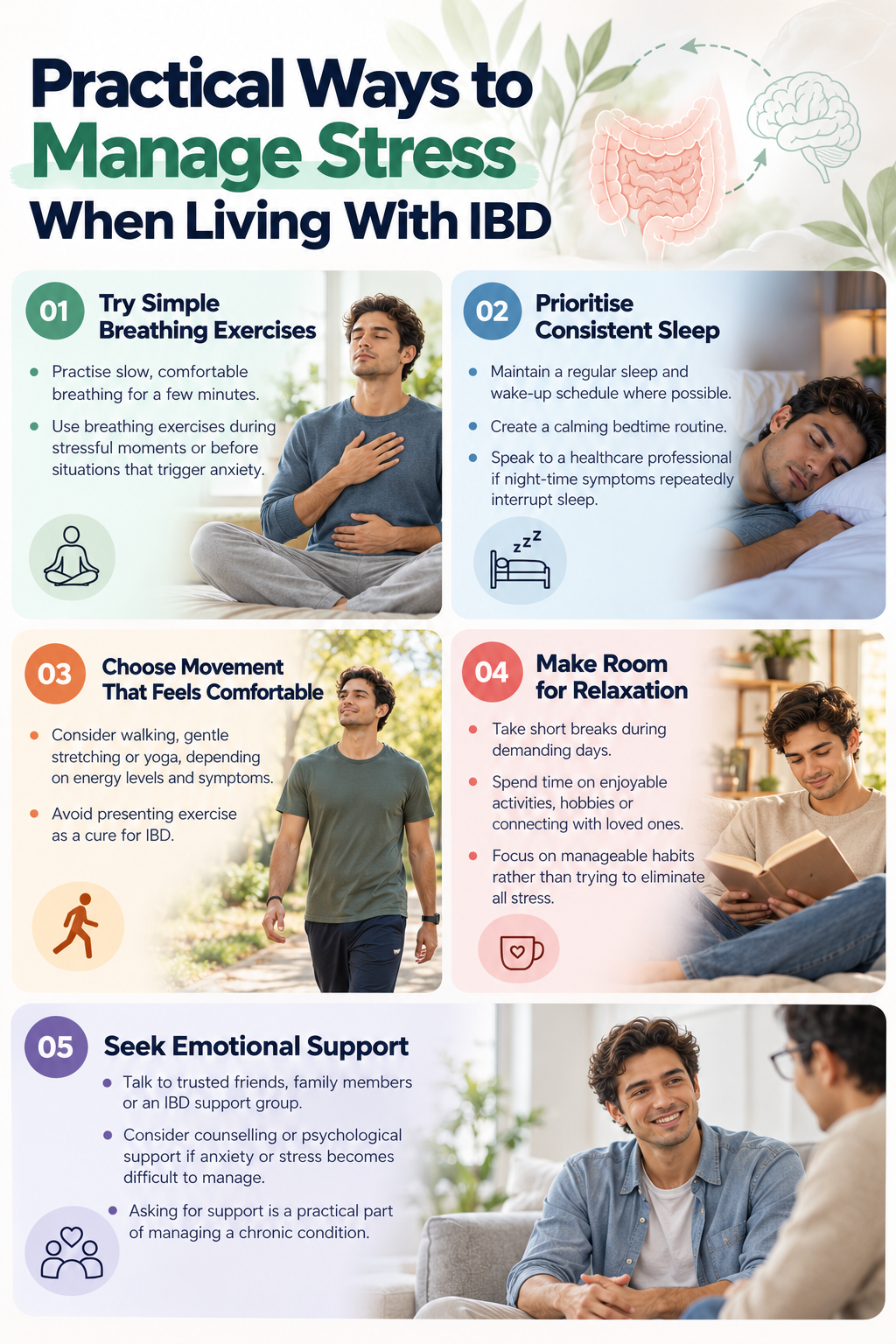
What can you do? Try keeping a simple journal to track your stress levels, sleep, symptoms, and medication. Over time, this may help you identify patterns and discuss them with your healthcare professional.
Remember, these signs don’t automatically mean stress is causing your symptoms or that your IBD is in a flare. If symptoms persist or worsen, consult your healthcare team to check whether active inflammation or another issue may be involved.
When Should You Speak to Your Healthcare Professional?
While stress can influence how you experience IBD symptoms, it’s important not to assume that every change is stress-related. Sometimes, worsening symptoms may indicate active inflammation or another underlying issue that needs medical attention.
Consider speaking to your healthcare professional if you notice:
- Persistent or worsening symptoms: Diarrhoea, abdominal pain, or bowel urgency that continues or becomes more frequent.
- Blood in your stool: This can be a sign of active inflammation and should be assessed.
- Changes in your usual symptoms: If your symptoms feel different from what you typically experience, don’t ignore them.
- Sleep and daily life disruptions: Frequent night-time bathroom visits, ongoing discomfort, or fatigue that affects your routine.
- Increasing anxiety or emotional distress: If stress or worry about your condition feels overwhelming, professional support can help you develop coping strategies.
Seek urgent medical attention for severe abdominal pain, significant bleeding, or signs of severe dehydration. Remember, stress management should complement your IBD treatment, not replace it. Continue taking prescribed medication and speak to your healthcare team before making any changes to your treatment plan.
Managing IBD involves more than responding to symptoms as they arise. Understanding how nutrition, sleep, stress, and everyday habits affect your well-being can help you make more informed decisions about your health.
At High Carb Health, you’ll find structured lifestyle education, practical nutrition guidance, and ongoing coaching designed to support your IBD journey. Our Beyond IBD program covers five lifestyle pillars: diet, hydration, mindset, sleep, and exercise, with personalised guidance and community support.
If you’re looking for guidance on building sustainable habits while living with Crohn’s disease or ulcerative colitis, explore High Carb Health and book a free consultation to learn more about our approach.